Long Island community members on a mission to reimagine and reinvent policing and hold the NCPD and SCPD accountable.
🚨
Long Island community members on a mission to reimagine and reinvent policing and hold the NCPD and SCPD accountable. 🚨
About LIAFPA
Long Island Advocates For Police Accountability, Inc. (LIAFPA) is The Corridor Counts, Inc. sibling organization.
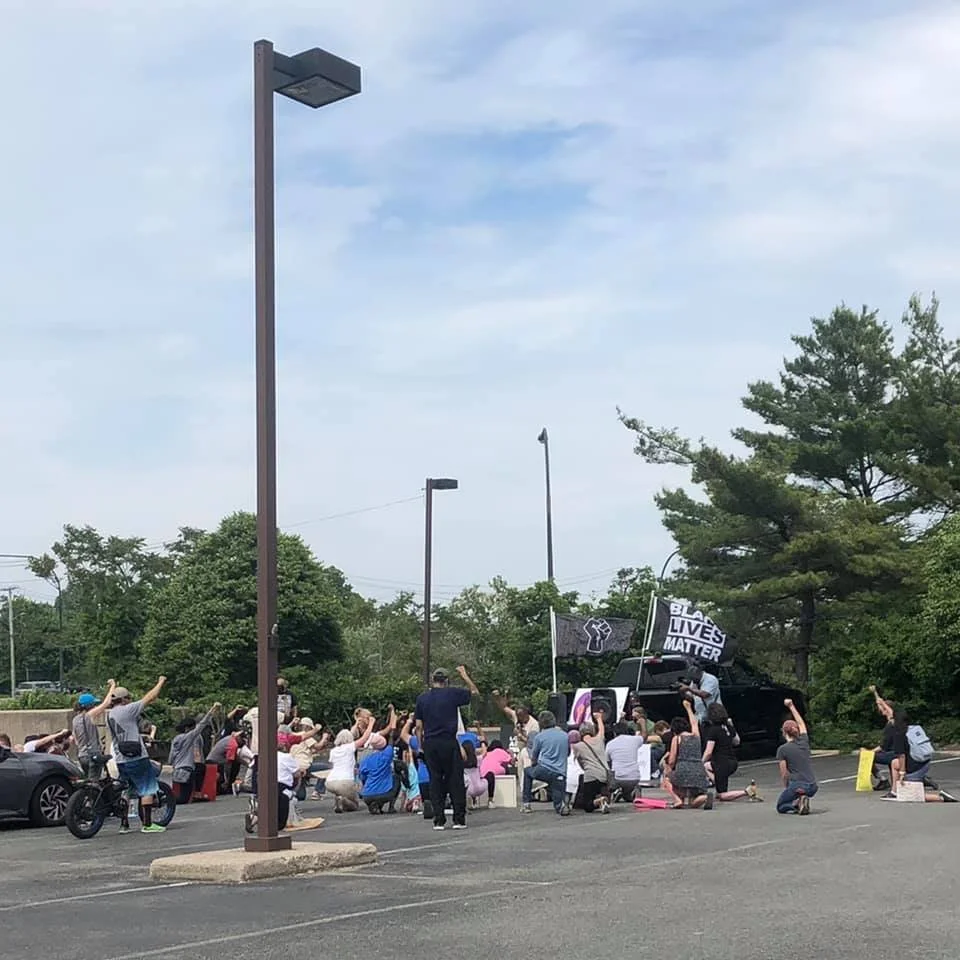
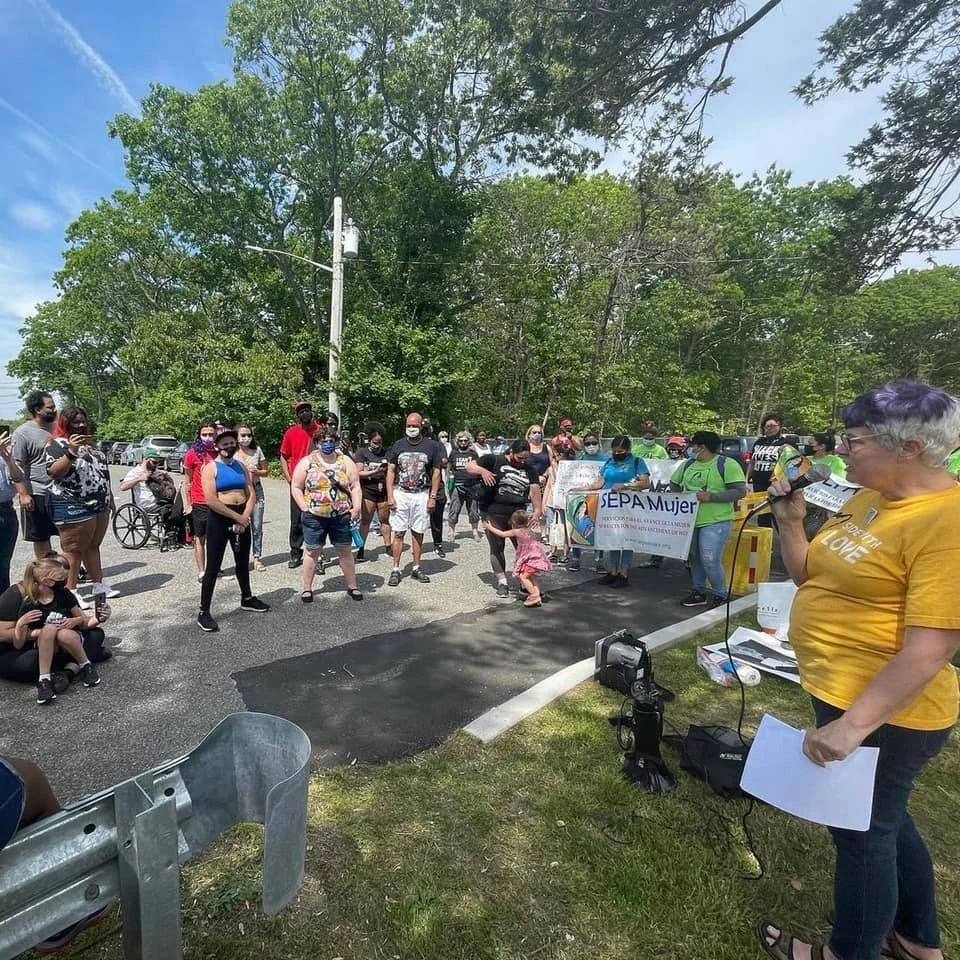
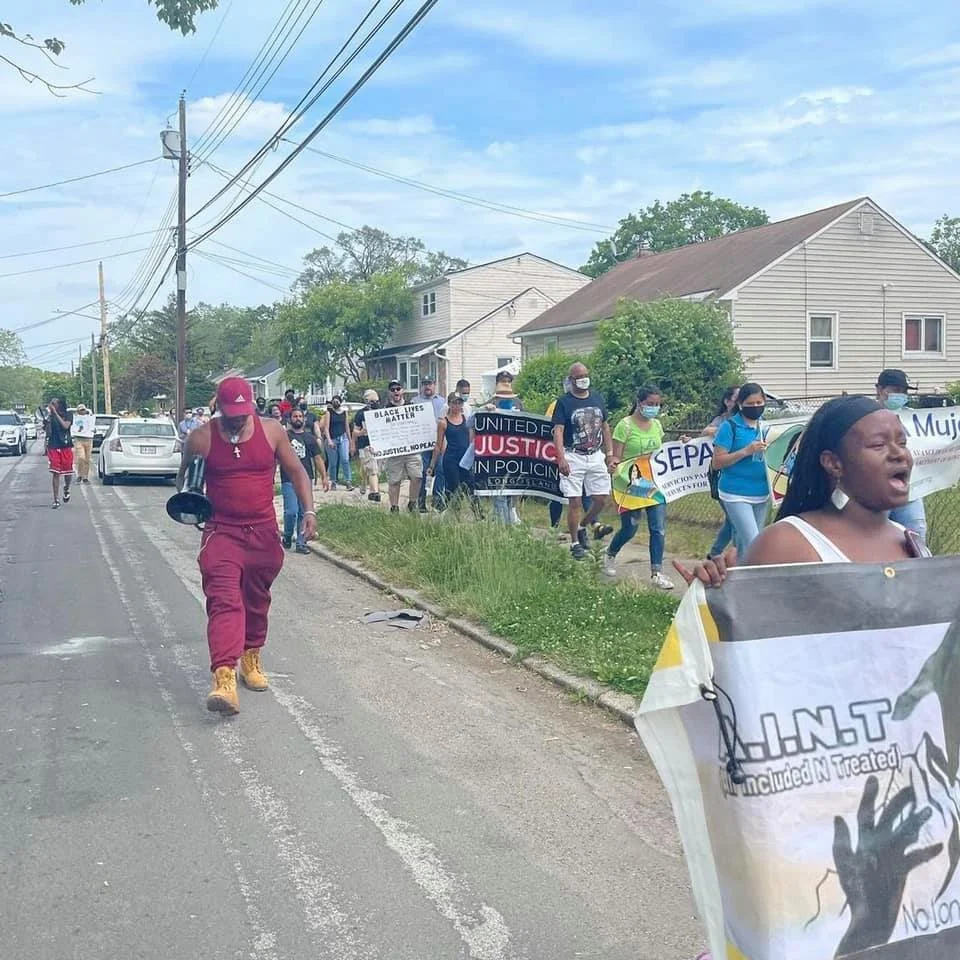
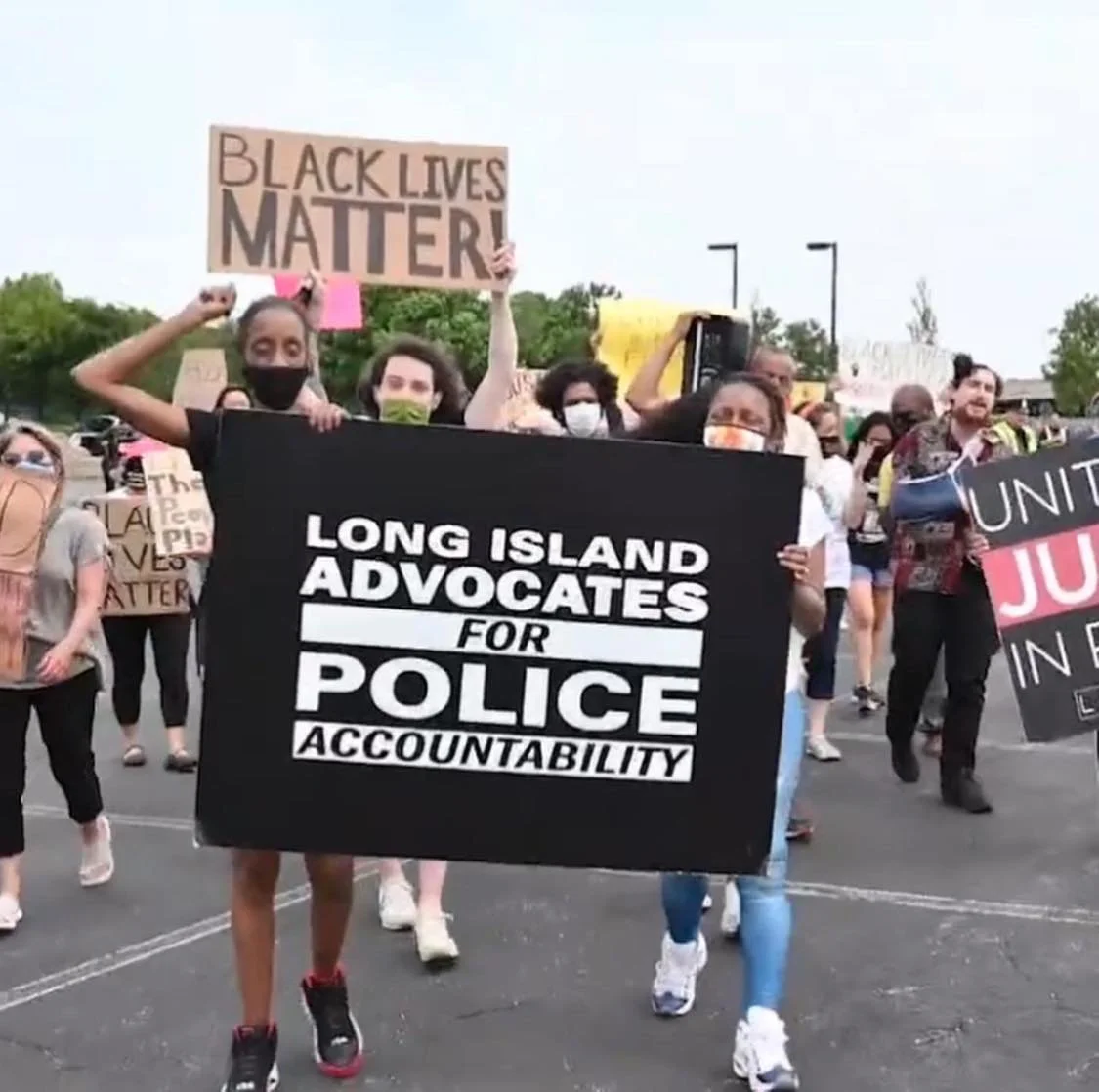
Founded in the Summer of 2020, Long Island Advocates For Police Accountability, Inc. is a progressive action group of organizations, neighbors and colleagues from Long Island who have joined together to affirmatively address the many concerns that have, for a long period of time, existed around the systemic, institutional and individual injustices created by a biased and racist policing system and all those systems to which it is connected, including the needless criminalization of special needs and mental illness. We stand clear that the movement, which has sparked a call for a shifting away from how policing is done, is valid and historically accurate. The improper treatment of Black and Brown communities by police, which has resulted in needless deaths, injuries, and abuse of authority, will no longer be tolerated. Community members of all races and ages have joined together to let police departments, police officials, heads of police agencies, elected officials, and decision makers know that the Black Lives Matter Movement cannot be ignored. Supporting the voices of protesters, LIAFPA develops and proposes concrete plans to provide to Suffolk and Nassau County elected officials, decision makers, and other governmental officials pathways in which critical change can be enacted. To adhere to our mission and complete our work, the group consists of research teams, writing teams, frontline/direct protest teams, and other action committees, all of which are aimed at working together as a unified force for prompt and meaningful change.
What Do We Do?
Community Teach-Ins
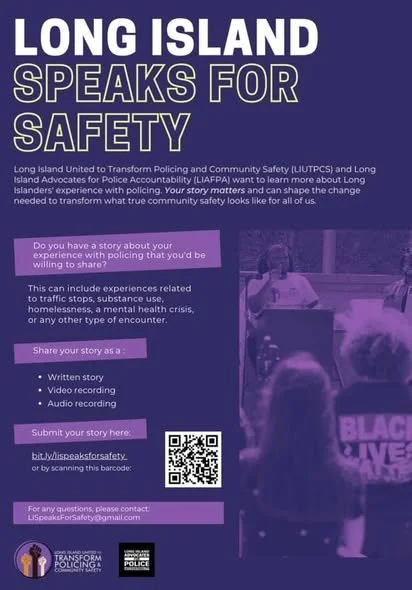
Advocacy
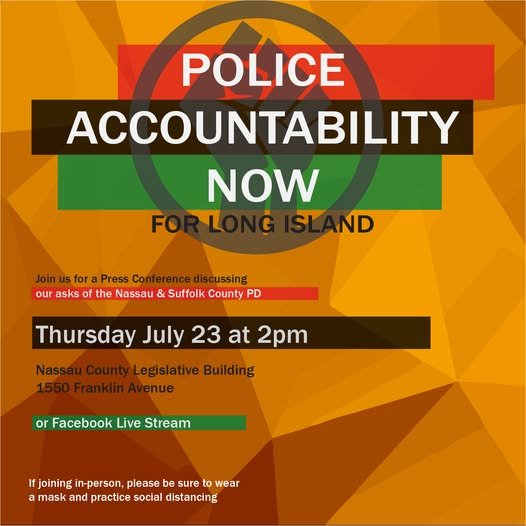
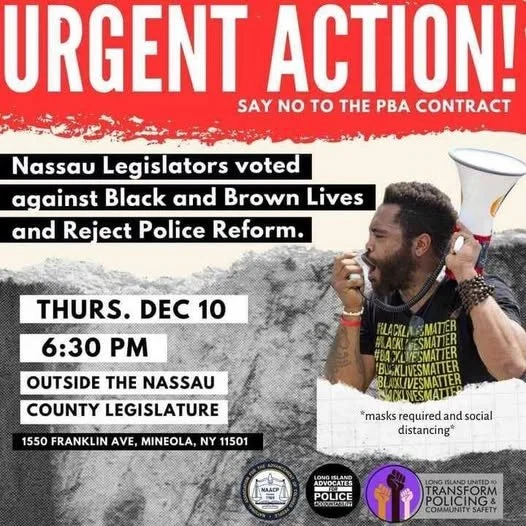
Participant Education

Current Work
Enforcing Police Accountability Through A F.O.I.L. Request
Addressing Bruce Blakeman’s Racist and Inaccurate Mailer Depicting Hispanic Men As Gang Members

Raising Concerns About Bruce Blakeman’s Armed Civilian Militia
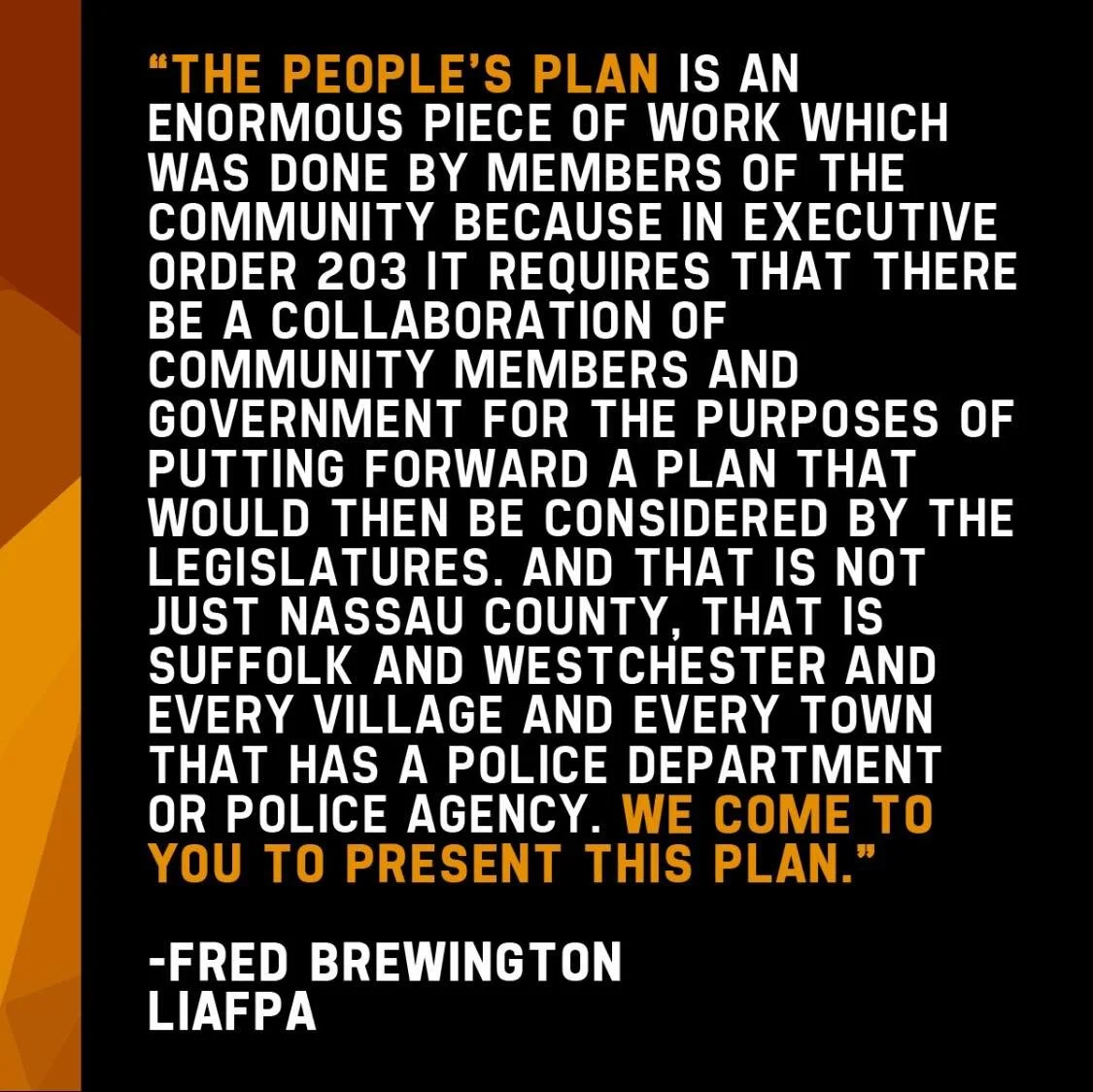
The People’s Plan:
Reimagining Policing and Public Safety on Long Island
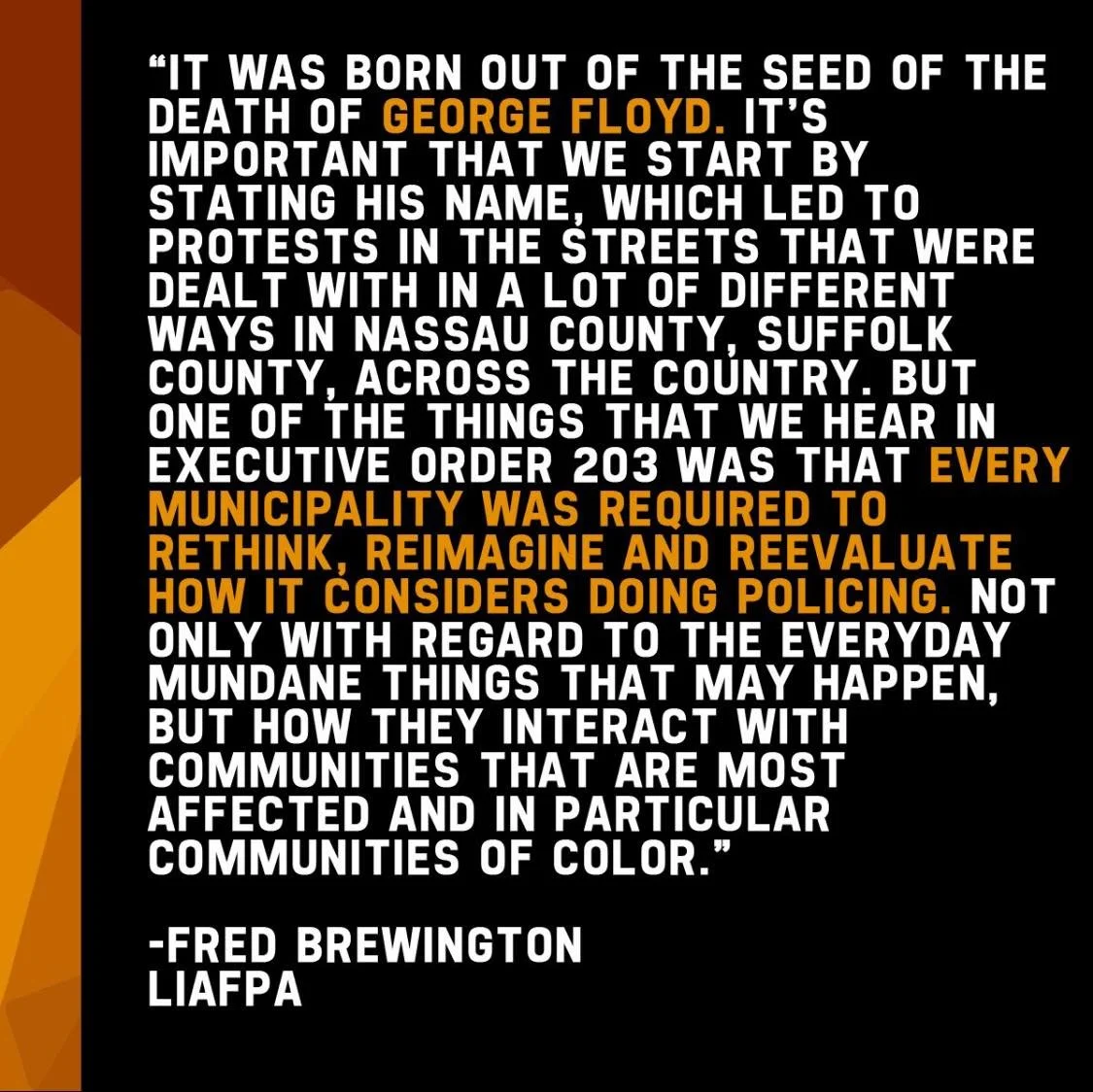
The People’s Plan - “Created by the People, for the People”
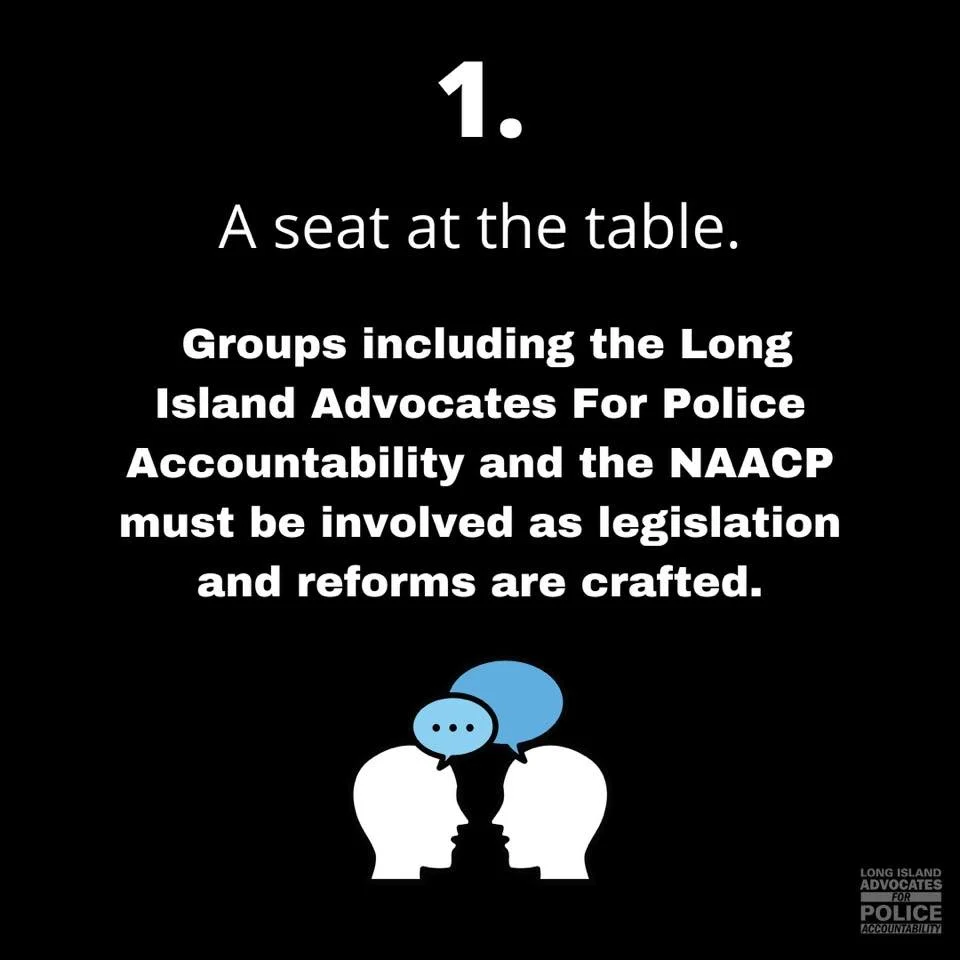
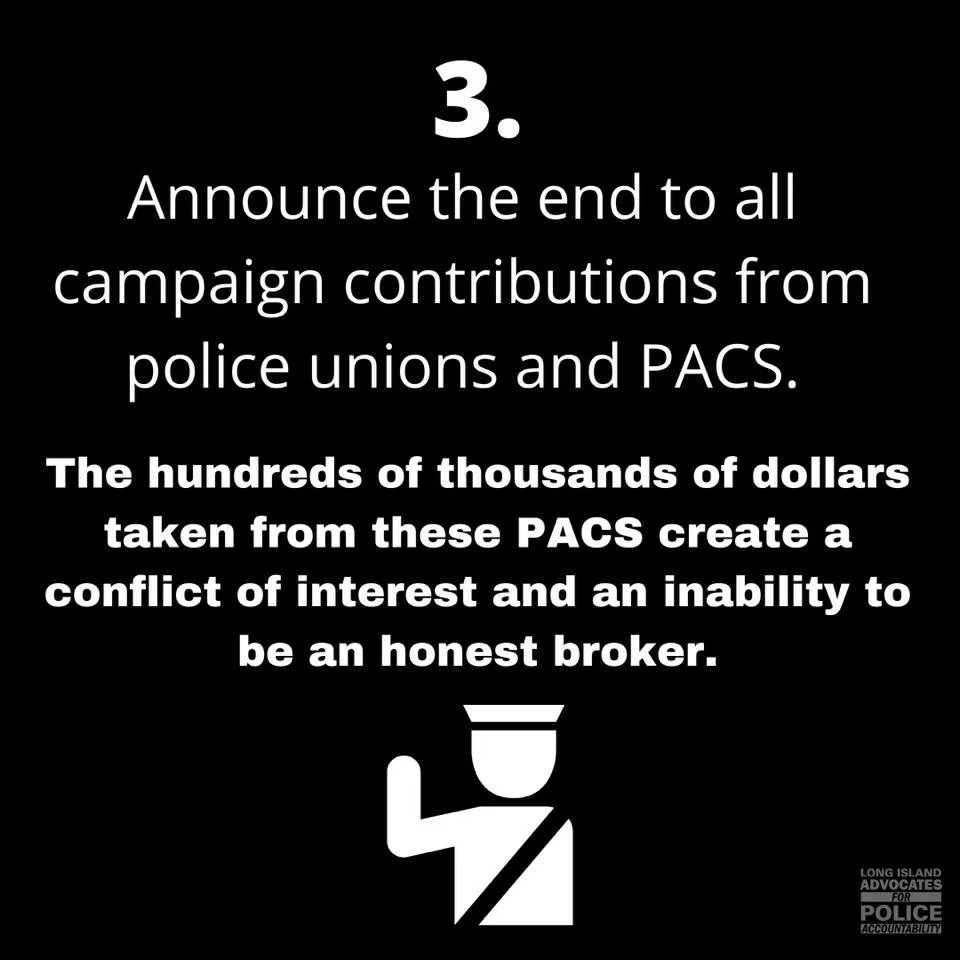
The People’s Plan: Reimagining Policing and Public Safety on Long Island is a set of public safety recommendations developed by three community-led organizations, Long Island Advocates for Police Accountability, Inc., Long Island United To Transform Policing and Community Safety, and United for Justice in Policing Long Island, with the input of hundreds of Long Islanders. This comprehensive plan presents twelve (12) proposals for structural reform to Reimagine Policing and Public Safety to ensure that Long Island is safe for all residents.
Learn more about each proposal by browsing through the drop-downs below. In addition, you can download one-pagers that provide a comprehensive overview of each proposal, as well as read the full 310-page, research-backed Plan.
-
Create A New Crisis Response Model for Long Island that reforms 911 responses to ensure that call-takers can adequately and holistically assess callers in crisis, creates behavioral health co-responder teams composed of clinical professionals, trained peer specialists, and unarmed crisis responders, establishes a tiered response system to match the level and type of risk posed, and includes collection and reporting of comprehensive data on these calls and responses.
-
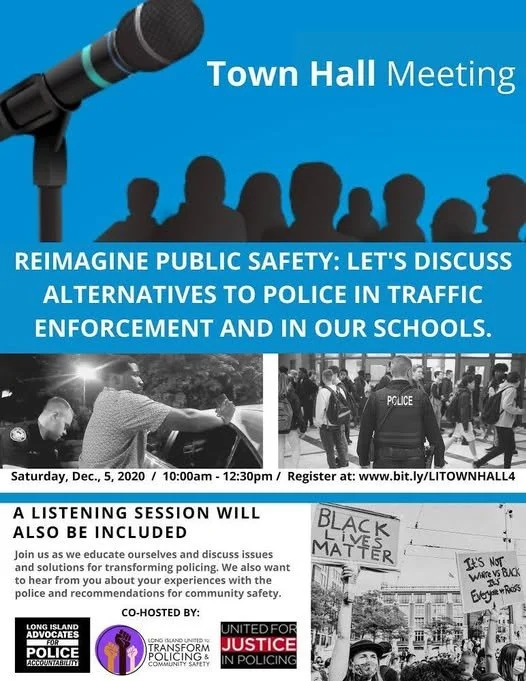
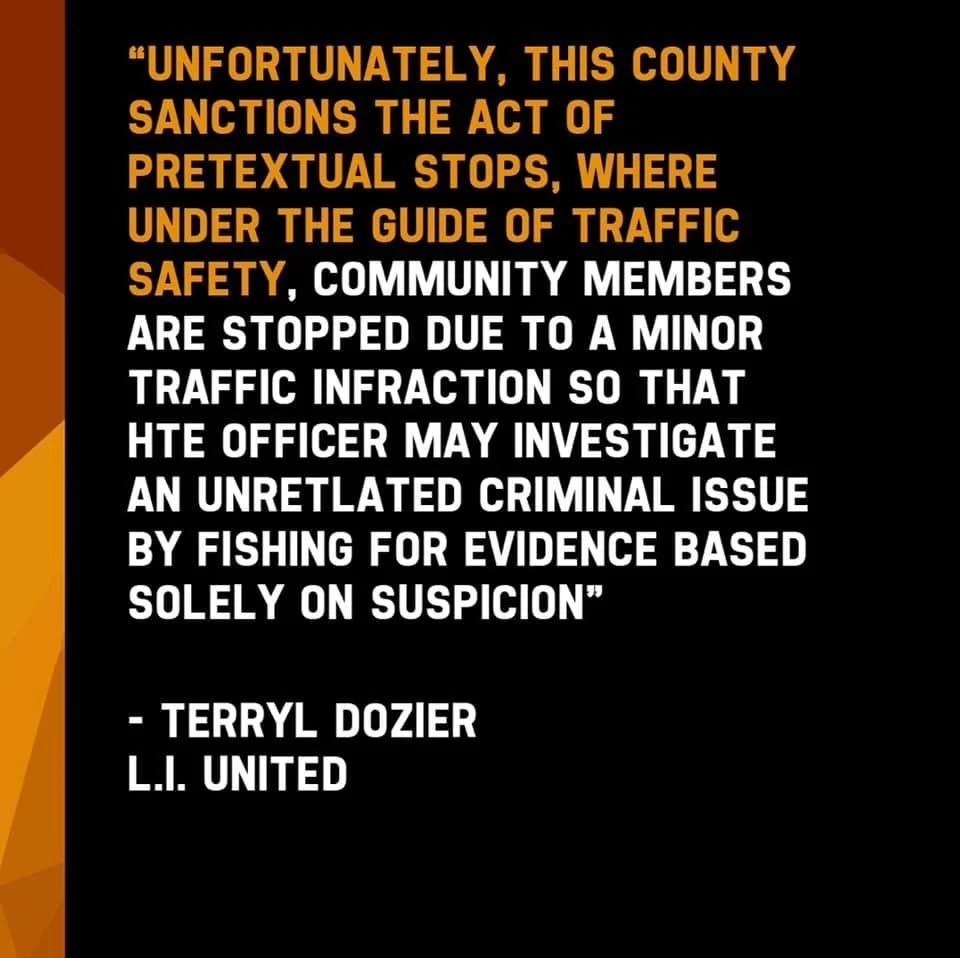
Eliminate disparity in traffic stops on Long Island by transforming the policies regarding police traffic enforcement, exploring options for alternative unarmed traffic officers, and collecting, publishing, and analyzing comprehensive data on traffic enforcement in alignment with the STAT Act. End pretextual stops and warrantless searches during traffic stops.
-
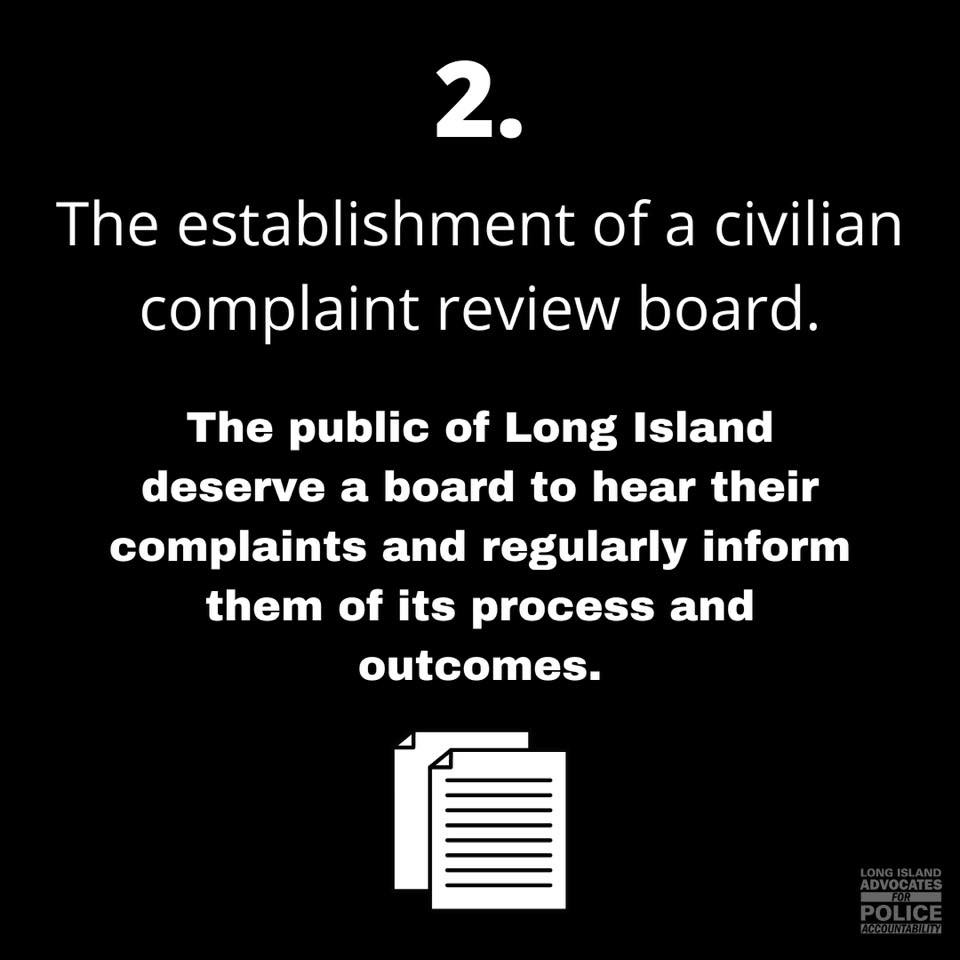
Civilian Complaint Review Board. Create a Civilian Complaint Review Board (CCRB) to fairly and transparently resolve allegations of police misconduct in a manner in which both the public and the police department have confidence. The CCRB must be well-funded and independent, have strong investigative authority, collect and publish data in a fully transparent manner, and have the power to direct the police commissioner to impose discipline.
Office of Police Inspector General. Develop an Office of Police Inspector General that is well-funded, independent, and has the authority to audit, inspect, evaluate and investigate the activities, records, policies and data collected by the Police Department, receive copies of all complaints and communications with complainants, and to track and monitor systems of complaints and investigation.
The STAT Act. Police departments must collect comprehensive data on all facets of police/civilian interaction, publish the raw comprehensive data on their websites, and hire independent vendors from local institutions of higher education to analyze the data, prepare written reports, and inform the public and county legislatures. This includes data on traffic, pedestrian and bicycle stops, on 911 calls, on use of force, complaints, police in schools, hate crimes, and language access.
Public Safety Committee Oversight. Charge the Public Safety Committee with more active and engaged oversight of police departments. Best practices include: requiring data collection, reporting of raw data to the public, and engaging in independent analysis of the data. In addition, the Public Safety Committee, hold public hearings whereby the Police Commissioner is required to sit, provide data publicly, and answer questions from members of the PSC and the public about policing practices and policies.
Internal Affairs and Complaints. Remove complaints and investigations from the police department and create a CCRB and an inspector general’s office. Until these are in place ensure that all complaints are handled by internal affairs units and not precincts, share all complaints with the Public Safety Committee, and publish comprehensive data about complaints, investigations, and outcomes on the police department websites.
Right to Know Act. Pass The Right to Know Act (ID Law and Consent to Search Law) in both counties. Officers must provide their name, rank, command, date, and reason for the stop at the beginning of all encounters with civilians. They must ask if interpretation is needed and then provide it, and document all stops that do not end in arrest. In addition, warrantless searches should not happen without signed informed consent.
Liability Insurance. Mandate personal liability insurance for all officers and make it a contingency of employment. Departments should cover the average premium cost, provide reimbursement to officers whose premiums are below the average costs, and collect reimbursement from officers whose records lead to higher premiums.
Community Survey. Prioritize community surveys ensuring that all relevant communities are surveyed on a regular basis and that an impartial local institution of higher education is hired to develop, administer, and analyze the survey. These community surveys must measure how satisfied people are with how they are treated by police and how police handled their issue; civilian judgments about procedural justice; and people’s experience with language assistance.
Use of Force. Adopt best practices, language, and training to bring Use of Force policies in line with nationally proven standards. Require officers to exhaust all alternatives before resorting to use of firearms. Require comprehensive Use of Force data reporting. Create and require a Use of Force continuum that restricts the most severe types of force to the most extreme situations and creates clear policy restrictions for each weapon and tactic, as well as require warnings prior to the use of firearms.
-
Codify existing and/or non-existing policies mentioned in the plan into legislation, and LI police departments should fully implement. This includes: police must properly identify and report hate crimes and incidents; map and track hate crimes, non-designated offense, and incidents to see trends, prevent future events, and to provide an accurate picture of hate offenses in the county; communicate with the public to protect and warn communities, support the victim, their family, and the entire community; and develop rehabilitation and prevention programs with government, nonprofits and faith communities.
-
Develop a policy that provides safe and respectful treatment for transgender, gender non-binary, and intersex people in a manner appropriate to the person’s gender identity and/or expression. In short, develop and implement policies that ensure gender-expansive community members receive the same treatment as cisgender people. Explicit detail is mentioned in the plan.
-
Eliminate the SRO program and other programs that place police officers in schools, and redeploy funds spent on School Resource Officers to build Transformative Justice programs that avoid the criminal legal system, and increase social-emotional learning programs in schools and other supports that improve student behavior by meeting students’ needs.
-
Develop and implement a comprehensive Language Access Plan that ensures accessibility to non-English speaking community members and provide transparent data regarding the usage of bilingual resources.
-
Build authentic trust and legitimacy within communities by transforming the policies and practices of LI police departments.
-
Implement best and most up-to-date practices in leveraging technology and social media platforms to promote transparency.
-
Implement a set of policies and practices that ensure diversity and accountability within hiring, and promote comprehensive training that focuses on the needs of communities in the 21st century.
-
Implement policies and practices that ensure the mental well-being of police officers.
-
Develop a permanent, County-based Equity and Safety Task Force should be created through codification. It must use an equity-informed, “continuous reinvention” framework to assess the impact of safety reforms and recommend. This means the reform and reinvention mandated by Governor Cuomo’s Executive Order is always ongoing. This task force would be research-based and would:
i. Review data on key safety indicators.
ii. Solicit community feedback and dialogue
iii. Identify best practices to ensure holistic public safety
iv. Recommend new initiatives and assess impact

MEDIA
In The News
“Nassau Police Reforms Drafted, Advocates Call for More Involvement”
Long Island Press, January 8, 2021
“Group Calls For NCPD Commissioner Patrick Ryder To Resign”
Patch, June 17, 2021
“20 years on, activist Sergio Argueta still seeks social justice”
The Long Island Advocate, February 20, 2021
“Nassau Police Hired 17 Former NYPD Officers Accused of Misconduct, Reports Say”
Long Island Press, July 30, 2021
“Nassau County police officers to wear body cameras”
Fox 5 New York, May 27, 2021
“Suffolk officers fail to comply with body camera policies in increasing numbers, oversight report says”
Newsday, September 18, 2026
“Coalition calls for Nassau Police Commissioner Patrick Ryder to resign”
Newsday, June 17, 2021
Press Releases, Statements, and Letters
September 17, 2025
ICE Out of Long Island Press Release
March 5, 2026
Letter To Bruce Blakeman About His Armed Deputy Program
April 20, 2026
ICE Out Of Long Island (English)
March 5, 2026
Letter To Elected Officials Regarding Their Silence On ICE Terror On Long Island
May 1, 2026
ICE Out Of Long Island (Spanish)
March 5, 2026
Videos
Watch previously recorded videos, webinars, and teach-ins related to LIAFPA’s work.
Join LIAFPA
Contact Us!
Mailing Address: 556 Peninsula Boulevard, Hempstead, New York
Telephone: (516) 489-6959
Email: contact.LIAFPA@gmail.com